COLOMBIAN WOMEN FOR PEACE AND JUSTICE
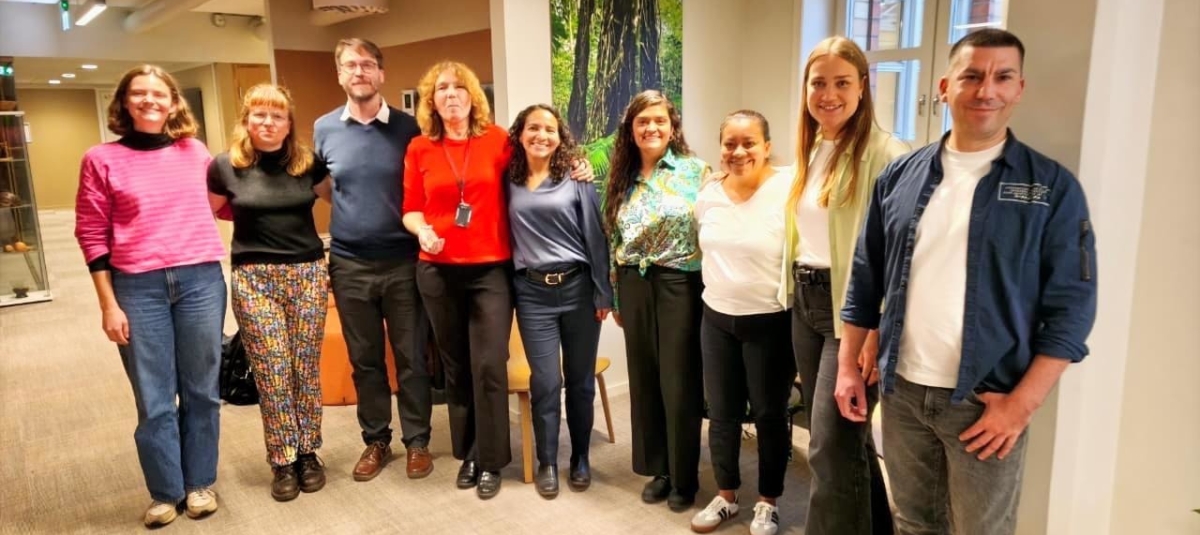
In Colombia, the war did not end with the signing of the 2016 peace agreement. It only changed shape. According to Human Rights Watch, more than 1,200 human rights defenders and social leaders have been killed since, while the demobilization of FARC left a power vacuum in many regions, allowing dozens of new armed groups to impose their will on the civilian population. Despite their prominent role in peacebuilding, women are among the most vulnerable, often exposed to targeted violence, recruitment of girls by armed actors, and persistent use of sexual violence as a weapon of control. Unfortunately, these realities make headlines in Western media only when the violence becomes impossible to ignore. During their recent advocacy tour in Europe, two human rights defenders — Katerin Jurado Díaz and Yirley Judith Velasco Garrido — reminded us that peace is impossible without listening to women and protecting their rights.
LONG HISTORY OF GENDER-BASED VIOLENCE
After more than 60 years of armed conflict in Colombia, the scars are deep, and the scale of human suffering is difficult to fully grasp. For many of us, war is primarily associated with men dying on the battlefield, yet in reality, military conflicts often impact women and children just as severely, often in strictly gendered ways. Sexual violence is a war crime that disproportionately harms these groups. Between 1957 and 2016, more than 35,000 Colombians suffered sexual, gender-based, or reproductive violence; 90 percent were women, and more than one-third were children or adolescents.
The long-awaited 2016 Final Peace Agreement (FPA) was celebrated as the world’s first peace accord to fully integrate a gender perspective, containing more than 100 commitments to the rights of women and girls. One of the groundbreaking features of the peace talks in Colombia is the fact that women made a significant portion of the negotiating teams of both the Government and FARC. As a result, the agreement treats sexual violence committed during the conflict as a war crime that cannot be amnestied. Another major achievement is reflected in the composition of the post-conflict justice system: women constitute a majority of the judges in the Special Jurisdiction for Peace (JEP), and a dedicated Gender Commission ensures that accountability mechanisms address the specific harms suffered by women, girls, and LGBTQ+ persons.
However, the road to peace and safety for everyone is long and winding. As evidenced by the 2024 FOKUS report, the peace process is still facing numerous obstacles and challenges halfway through the period covered by the FPA. Despite the fact that a great number of laws, decrees, resolutions, and public policies have been produced, a lack of political will and institutional inflexibility hinders the implementation of the FPA’s main goals. In addition, cultural resistance and bureaucratic complexities further obstruct progress.
PEACE CANNOT BE BUILT WITHOUT WOMEN
With the goal of raising awareness of these challenges faced by women leaders and human rights defenders in Colombia, Corporación Sisma Mujer is carrying out an international advocacy tour across Sweden, Norway, the United Kingdom, Ireland, and Germany. During the recent seminar in Oslo, facilitated by the Forum for Women and Development (FOKUS), Katerin Jurado Díaz , CEO of Corporación Sisma Mujer and Yirley Judith Velasco Garrido, Executive Director of Asociacíon Mujeres Sembrando Vida, shared their experiences of fighting for peace and women’s rights—accompanied by Marcos Knoblauch, Communications Coordinator at the Swedish Fellowship of Reconciliation (SweFOR).
The seminar in Oslo emphasized the need for stronger implementation of Colombia’s commitments under UN resolution 1325, ensuring that women leaders are protected and able to participate fully in peace building. This requires an intersectional and territorial approach to ensure long-term protection for human rights defenders across the country, backed by national institutions. Another key message was the need for diplomatic and international actors to demand women’s meaningful participation in peace dialogues, for the government’s “Total Peace” agenda cannot truly be sustainable if half the population is excluded from effective decision-making.
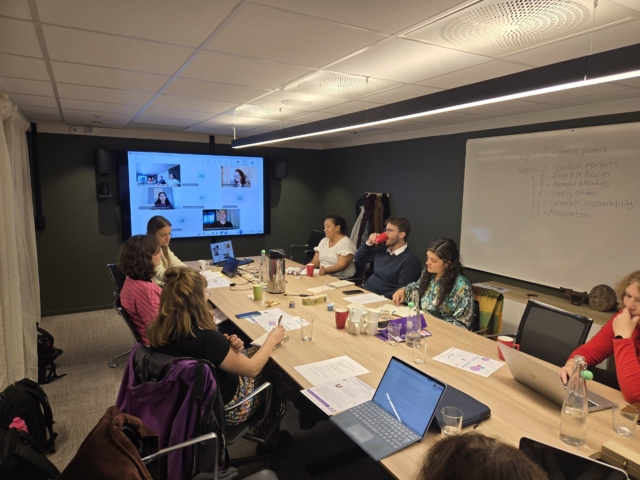
Seminar with the delegation from Colombia Foto: Privat
FROM LISTENING TO TAKING ACTION
Following the seminar, Katerin, Yirley, and Marcos expanded on their message in a short interview with LAG activists. The conversation centred mainly on the political context in which the peacebuilding efforts are taking place, including Colombia’s upcoming election and how its outcome may affect this struggle. Katerin expressed modest expectations for a progressive candidate, noting that current polls point toward a government more inclined toward restrictive security measures. In a geopolitical context where USAID support to Colombian civil society has already been drastically reduced, international solidarity is becoming more important than ever.
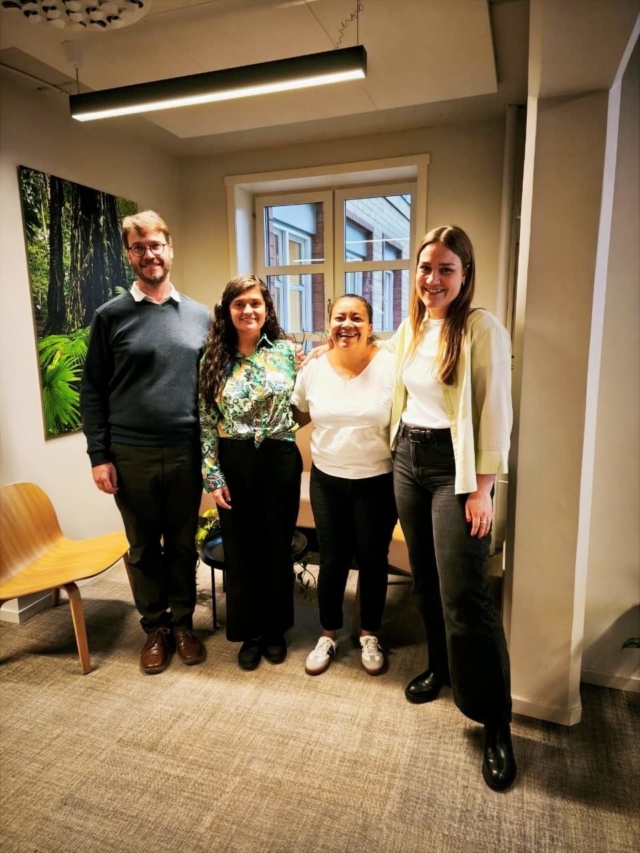
Delegation group from Colombia and Sweden Foto: Privat
Yirley captured the essence of their message in five simple words: “solidarity begins with listening”. Being heard is already beneficial, yet for those of us abroad, it also raises a difficult question: how can we make our contributions more tangible? As Katerin pointed out, peace is a global public good, and it must include women and girls and acknowledge the historical risks they have borne. Marcos then emphasized the importance of solidarity at a time when it seems to be weakening, stressing the value of building bridges between civil society in Norway and Colombia. While the peace process is led by women and human rights defenders, the role of the international community is to accompany, support, protect, and make their work visible.
If peace in Colombia is a global public good, then its defence is a global duty. What Colombian human rights defenders are asking is not to be rescued, but to be accompanied. The much-needed change often begins with someone choosing not to look away.